
ASK US HOW OUR AI SALES AGENCY CAN 3X YOUR REVENUE?
Is Your Brand Visible in AI Search Results?
See how ChatGPT, Google AI, and other AI engines describe your brand and who they recommend instead.
No obligation • Custom preview • Executive-ready insights
Powered by BEST-IN-Class Technology! ➤
WHY YOUR REPS LOSE TO MINE
How an AI Sales Agency Coach Changes the game
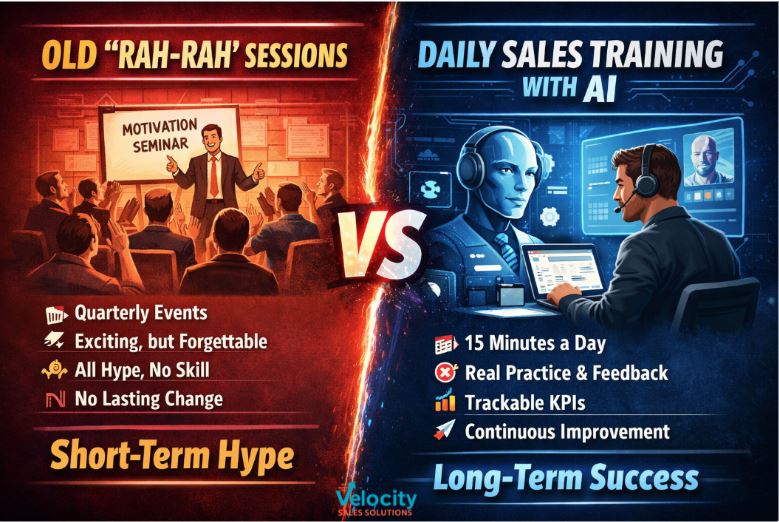
How to Build an AI-Powered Daily Sales Training Program
Most sales teams don’t have a talent problem. They have a training consistency problem. Sales excellence is no different than elite athletics. Here’s how top-performing organizations are now building ... ...more
AI & Search Technology ,AI-Driven Sales Strategies &Sales Career Development & AI
February 11, 2026•4 min read
The Attribution Myth and the AI Reality
In modern marketing, attribution and conversion are often treated as the same thing. They are not...and confusing them leads to bad decisions, misallocated spend, and false confidence in what’s actual... ...more
Sales Productivity & Routines ,Enterprise Sales Strategy &Sales & AI Transformation
February 09, 2026•7 min read
Why 2026 Is the Tipping Point for AI in Sales?
AI in sales isn’t new. What’s new is that multiple adoption curves are crossing at the same time: Buyers are using AI to research and decide earlier. AI has shifted from “assistant tools” to agent-l... ...more
AI Adoption Pitfalls & Best Practices in Sales ,Sales AI Adoption Challenges &Sales & AI Transformation
January 29, 2026•7 min read
OUR SERVICES

AI Sales Strategy & Consulting
Develop data-driven sales strategies that align with your business objectives and market opportunities, leveraging proven methodologies and industry best practices.

AI Marketing Automation
Implement sophisticated marketing automation systems that nurture leads, optimize campaigns, and deliver personalized customer experiences at scale.

AI Sales Team Training
Empower your sales team with advanced training programs, utilizing cutting-edge methodologies and AI-powered tools to maximize performance.

AI Technology Integration
Seamlessly integrate best-in-class sales technology solutions into your existing systems to streamline operations and boost productivity.

AI Lead Generation
Generate high-quality leads through multi-channel approaches, advanced targeting techniques, and conversion optimization strategies.

AI Performance Analytics
Gain deep insights into your sales performance with comprehensive analytics, reporting, and actionable recommendations for continuous improvement.
Best AI Sales Agency Resources
Access curated resources, insights, and educational content from industry leaders

150
CLIENTS SERVED
200%
AVG ROI INCREASE
95%
CLIENT SATISFACTION
24/7
SUPPORT AVAILABLE
Few OF oUR PARTNERS




Zero-Risk AI Transformation Starts Here
Take the 2-minute AI Sales Scorecard and get a personalized roadmap from the Best AI Sales Agency showing your guaranteed ROI potential. If we don't deliver measurable results in 90 days, we work free.


Our Partners
Copyright 2026 . All rights reserved
AI-Driven Sales. Guaranteed ROI.
🔥 Get AI sales strategies straight to your inbox